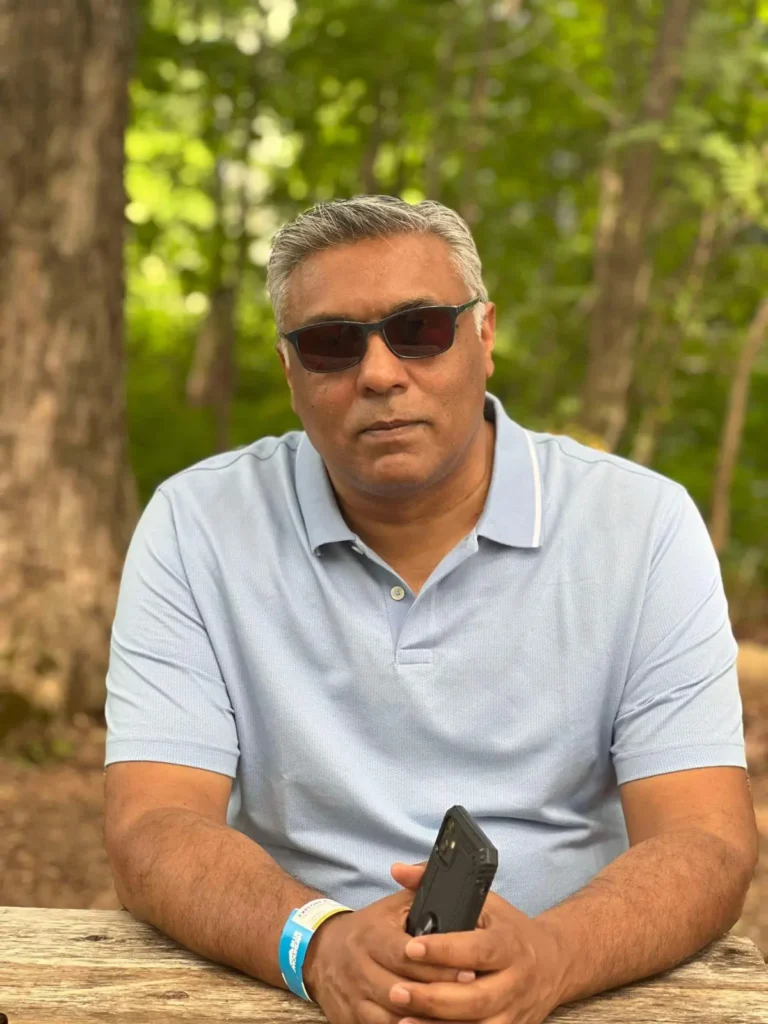
Meet Bilal Sami
Leaving Pakistan for London as a small child in 1972 meant starting over in a place that was unfamiliar and, at times, deeply unwelcoming for his family. Like many immigrant families, Bilal’s journey was shaped by hope, uncertainty, adaptation and the search for a sense of belonging. Living across different countries and cultures gave him a deeper understanding of what it means to leave one place behind while carrying its memories with you. Those experiences became part of the questions that would eventually inspire Bloody Immigrants.
Four countries, one life, one story
Whenever I think about where my story begins, I find myself going back to a time before I was even born.
In 1947, my parents migrated from pre-partition India to the newly formed country of Pakistan. They were part of a generation whose lives were caught in one of the greatest upheavals in the subcontinent’s history. Borders were redrawn, families were separated, and millions of people had to pick up the pieces and start again.
Of course, migration was nothing new to the Indian subcontinent. For centuries, people had come and gone, empires had risen and fallen, and generations had put down roots in unfamiliar lands. But for my family, migration wasn’t just another chapter in a history book. It was written into their history long before I had any say in the matter.
In Urdu, we have a phrase, apna mulk, meaning one’s own country.
But what happens when borders move, the world you know changes overnight, and you find yourself having to make a new place your own.
My parents had already done that once. They had left one home behind and built another in Pakistan. Then, in 1972, twenty-five years after their first migration, they decided to do it all over again. This time, they were leaving Pakistan for Britain, packing up the lives they’d built in tiny suitcases and setting off into the unknown.
I often wonder what those final days in Pakistan must have felt like for my parents. Selling their prized possessions, deciding what to take and what to leave behind, visiting family and friends, and saying their last goodbyes without knowing when they’d see one another again.
They were leaving for pardes, a word we use in Urdu for a foreign land, although I’ve always felt there’s a little more to it than that. It’s a place far from home. Somewhere unfamiliar, where you may find opportunity and build a life, but where a part of you might always be looking back at what you left behind.
Today, we can live thousands of miles away from our families and still know what everyone had for breakfast. There’s WhatsApp, video calling, Instagram, and, yes, the family group chats that never seem to sleep. Back then, staying in touch meant arranging an expensive telephone call in advance or sending a telegram. There were no spontaneous video calls, no pictures arriving within seconds, and no little blue ticks to reassure you that someone had received your message. Goodbyes had a different kind of finality to them.
And yet, my parents took that leap into the unknown.
Through what seems like a rather random twist of fate, my father ended up in Canning Town, East London.
Unfortunately, this wasn’t quite the fresh start they might have imagined. For anyone familiar with Canning Town in the 1970s, you’ll know it wasn’t exactly rolling out the welcome mat for Pakistani immigrant families. The area was desperately poor, unemployment was high, and racial hostility was part of everyday life. The National Front was gaining influence, and gangs of skinheads routinely targeted Black and Asian people. What was casually described as “Paki bashing” was, for families like ours, the very real threat of being attacked simply because of the colour of our skin.
My parents had travelled thousands of miles in search of a new beginning. This was the world waiting for them.
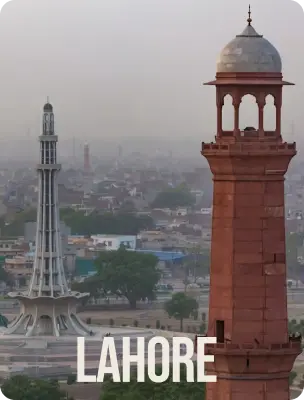
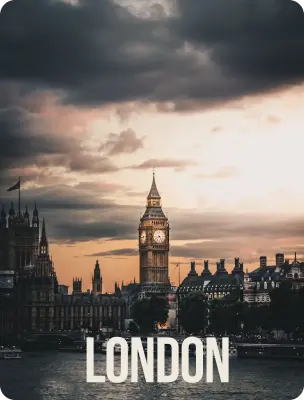
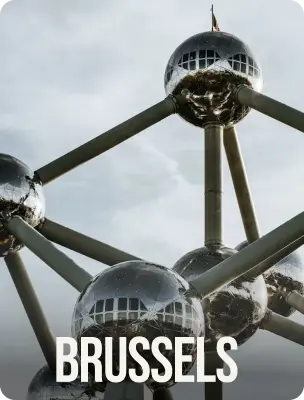
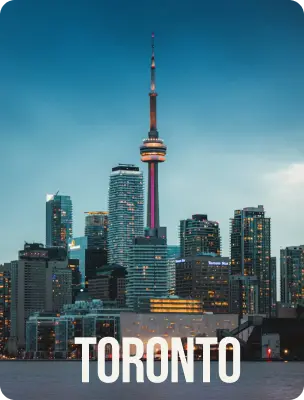
If you want to read more, join my Substack where I will share regular posts, highlighting my life as a serial immigrant, having lived, for a very short time, as a child in Pakistan, England, Belgium, and now finally settled in Canada.
Be the first to know when Bloody Immigrants arrives.
Join Bilal’s reader list for updates on the book, launch announcements, behind-the-scenes stories and the journey that inspired the novel.
No spam, ever. Unsubscribe anytime.